
Play starts with a box: 7 ideas using things you already have at home
A cardboard box, a few sheets of paper and a favourite soft toy. Sometimes, that is all you need to begin a new game together.
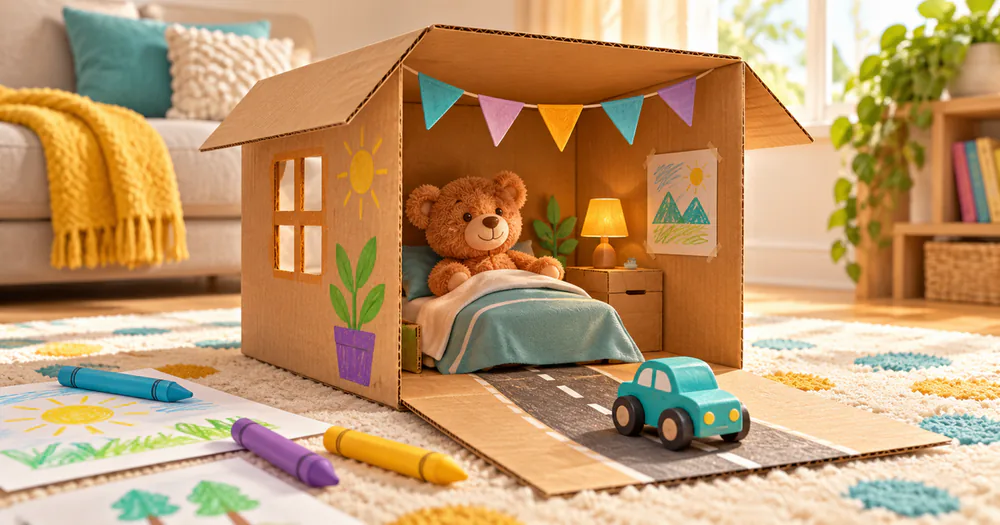
Before you put an empty box away, place it on the floor and ask: “What could this become?” Perhaps it is a garage. Perhaps it is a home for a bear. Or perhaps your child has an idea you would never have thought of.
You can adapt the activities below as you play, following your child’s ideas. Pick one that catches your child's interest; there is no need to work through the whole list.
Before you begin
Choose a clean cardboard box with any staples and loose packaging removed. Add paper, crayons suitable for your child, a few socks or soft toys.
An adult should do any cutting in advance and put the scissors away. Choose materials appropriate for your child and stay nearby as you play.
1. A garage with room for one more
You need: a shallow box, toy vehicles and paper.
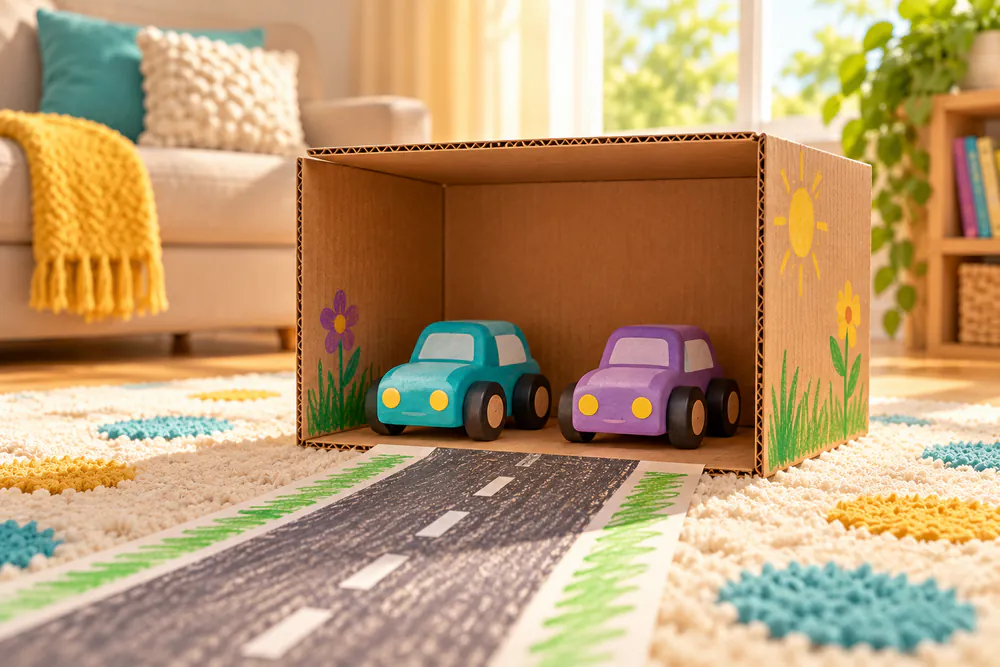
Lay the box on its side to make an open garage. Draw a road on paper leading to the entrance, then let your child decide where each vehicle parks. Does the wider one fit beside the other car? What happens if they turn it around?
If you do not have toy vehicles, draw some together. The garage can just as easily become a station for paper buses.
2. A cosy home for a soft toy
You need: an open box, a soft toy and a folded tea towel.
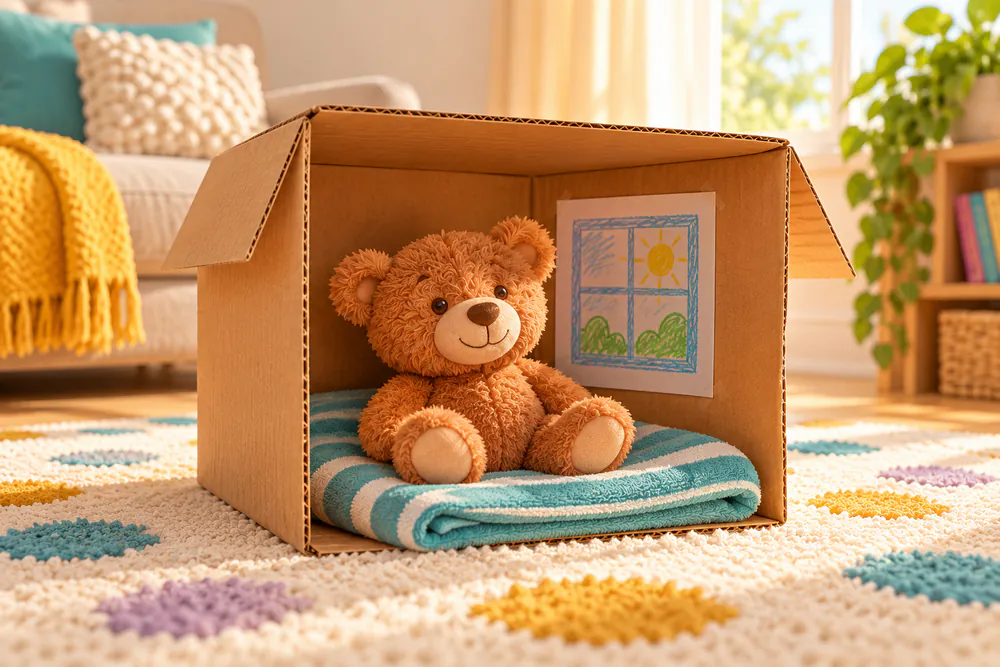
Invite your child to make a home for their toy. The tea towel could be a bed, and a drawing could become a window. Ask where the toy likes to sleep and what it can see outside.
Follow the details your child adds. If the bear needs a kitchen before a bed, that is where the story starts.
3. The little shop in the living room
You need: a box and a few large play objects, such as soft toys or board books.
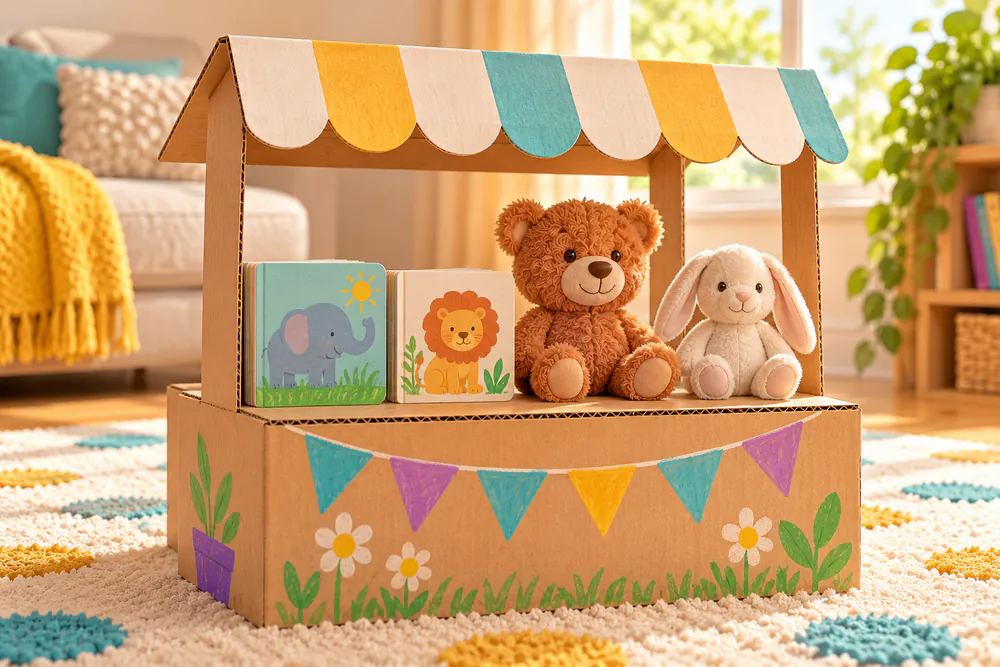
Turn the box into a counter and arrange the things for sale. Take turns being the shopkeeper and the customer: “I'd like two books, please.” “Which ones would you like?”
No money is needed. Choosing, asking and handing over the objects are enough to keep the game going. Your child can decide when the shop opens and what it sells next.
4. A collection of colours
You need: an open box and a few colourful socks or cloths.
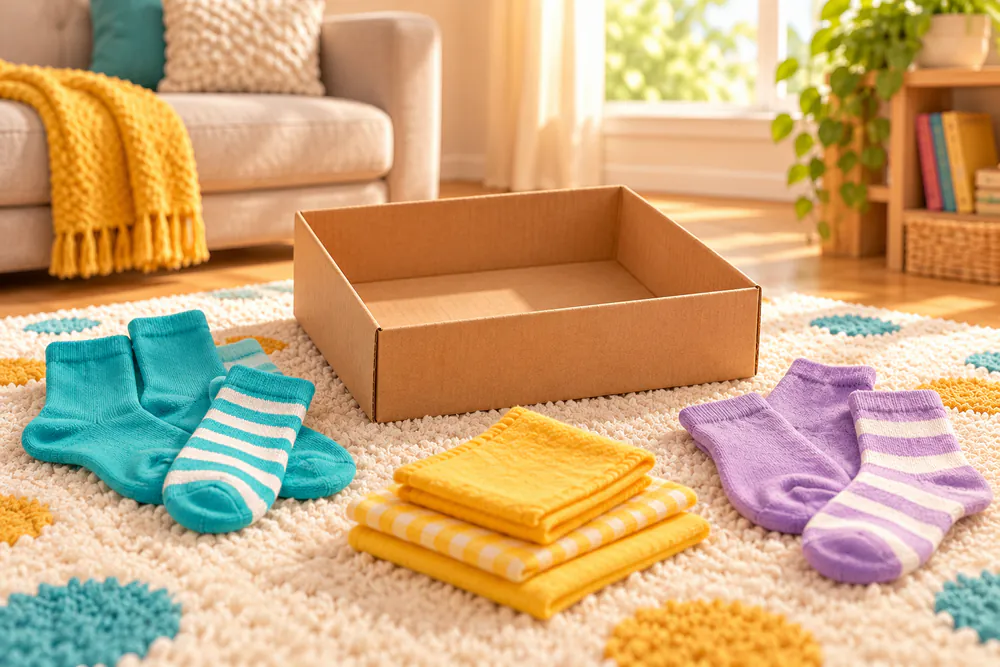
Choose a colour together and look among the materials for something that matches. Put each matching item in the box. Then spread everything out: which things look similar? Does one sock have more than one colour?
You can change the rule to stripes or matching pairs. If naming colours is not part of the game yet, simply compare two objects side by side.
5. A town drawn on cardboard
You need: a box opened flat by an adult and crayons.
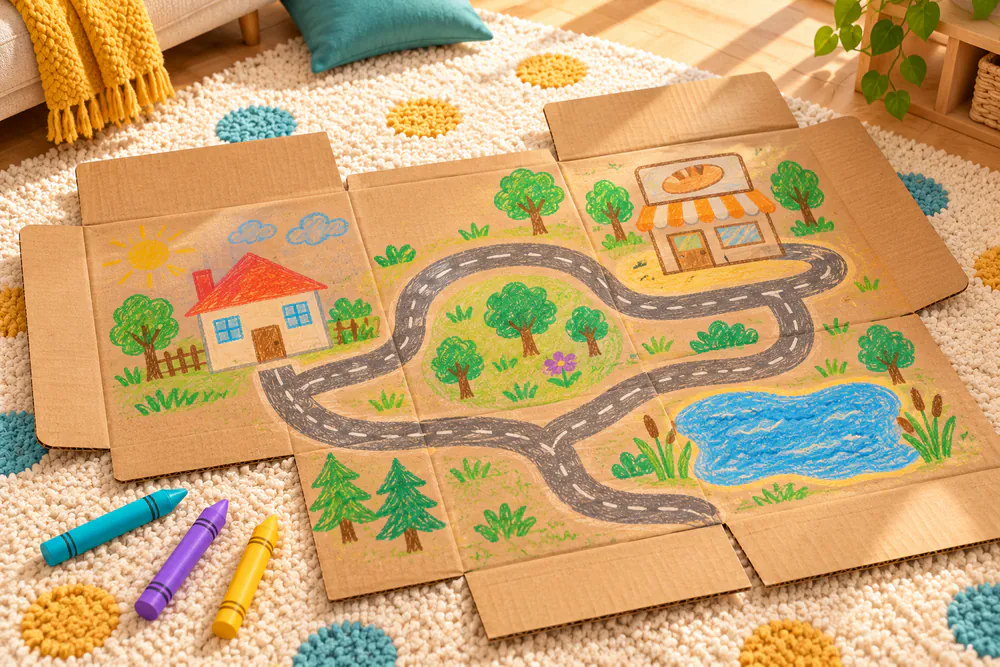
Draw a road across the cardboard. Take turns adding somewhere it could lead: a house, a park, a bakery or a lake. Your child might connect the places or invent a new destination.
Trace a route with a finger and tell each other where you are going. “We are taking bread to the house. Which way shall we go?” The town can keep growing another day.
6. A quiet rhythm game
You need: a closed, empty box resting on the floor.
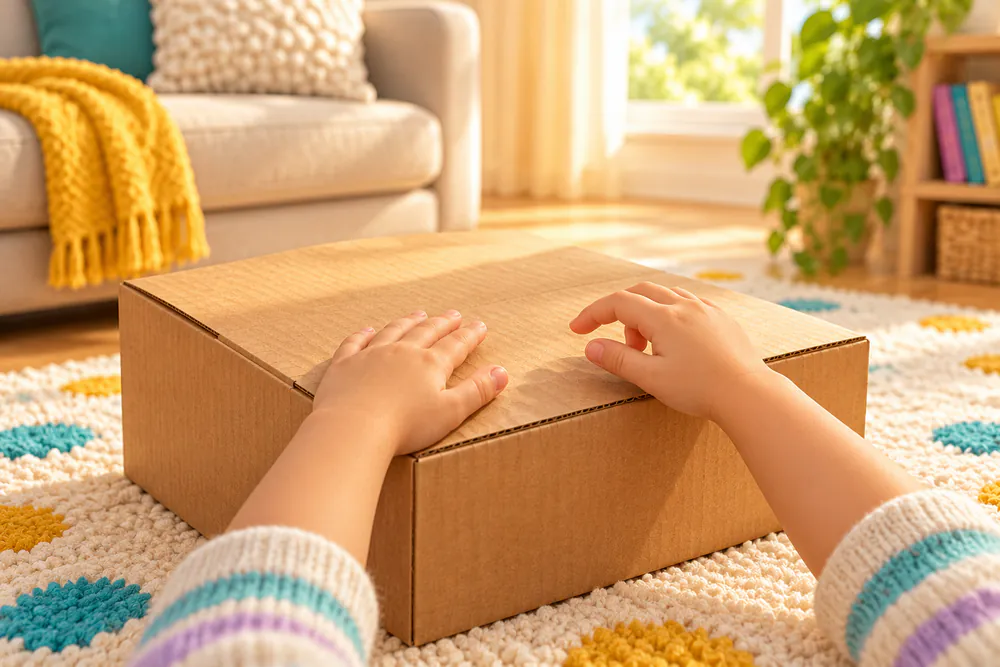
Tap the box gently with your hands: tap, tap, pause. Invite your child to answer with the same rhythm or invent their own. Then swap roles and follow their lead.
Start with just one or two taps. You can try tapping with fingertips or a flat hand and listen to the different sounds. Keep it gentle and stop if either of you finds the sound uncomfortable.
7. A tiny stage for a big story
You need: a box on its side, paper and crayons.
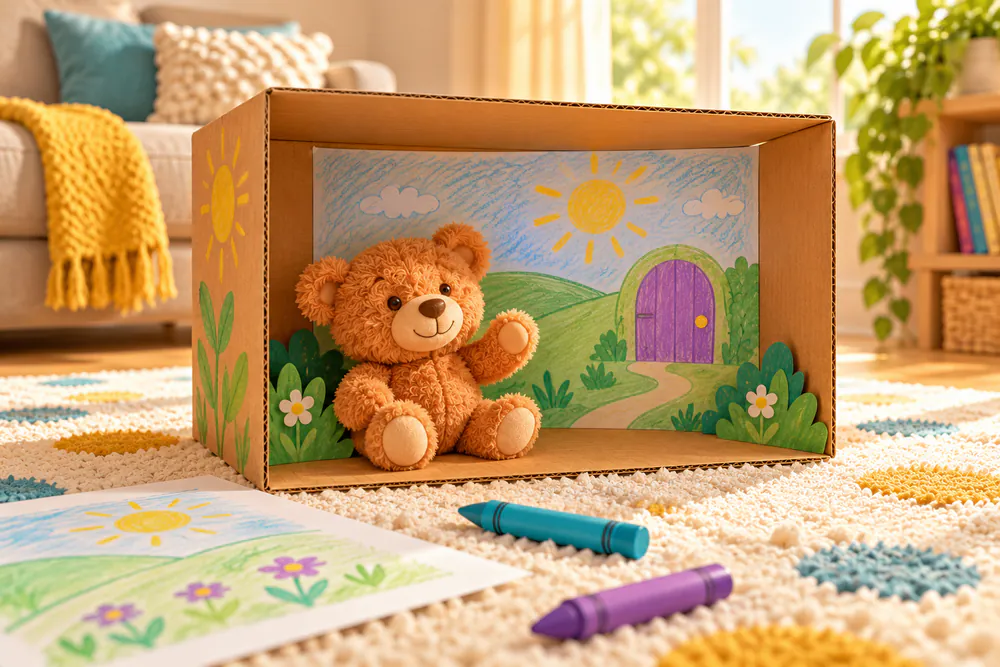
Draw a backdrop and place it inside the box. A soft toy can be the main character. Begin with a simple sentence: “One morning, the bear found a very unusual door…”
Let your child decide what happens next. You can take turns adding a sentence, a sound or a movement. The story might last a minute or continue tomorrow, with a completely different ending.
Keep the box. Follow the idea.
You do not need to make a finished model before the game begins. A drawn road, a folded cloth or the first line of a story can be enough to get started.
When you finish, ask what your child would like to keep for next time. Today's garage might become tomorrow's shop. You can use the same box again next time you play.
More to explore
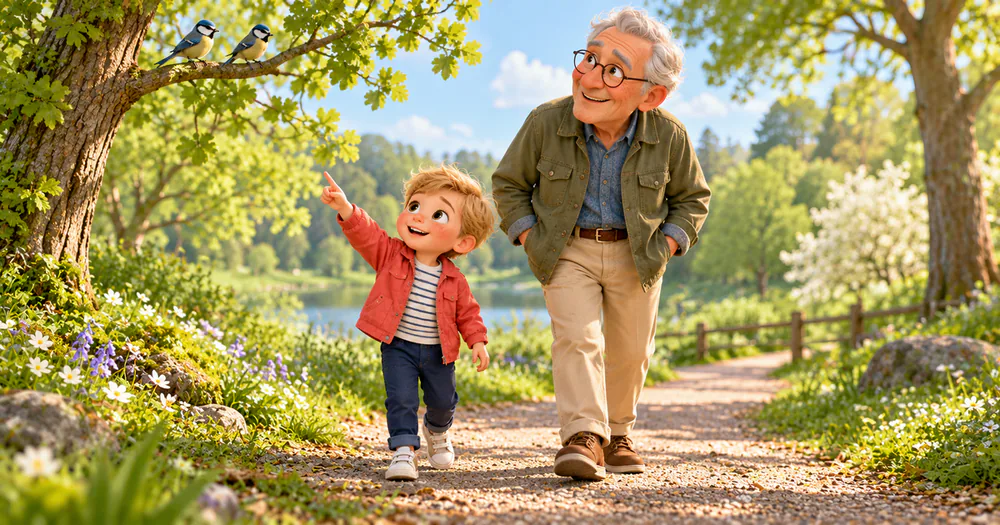
One walk, little discoveries: play and curiosity outdoors
Sounds, shadows and stories along the way: simple ideas for exploring together, even on a familiar walk.
Read article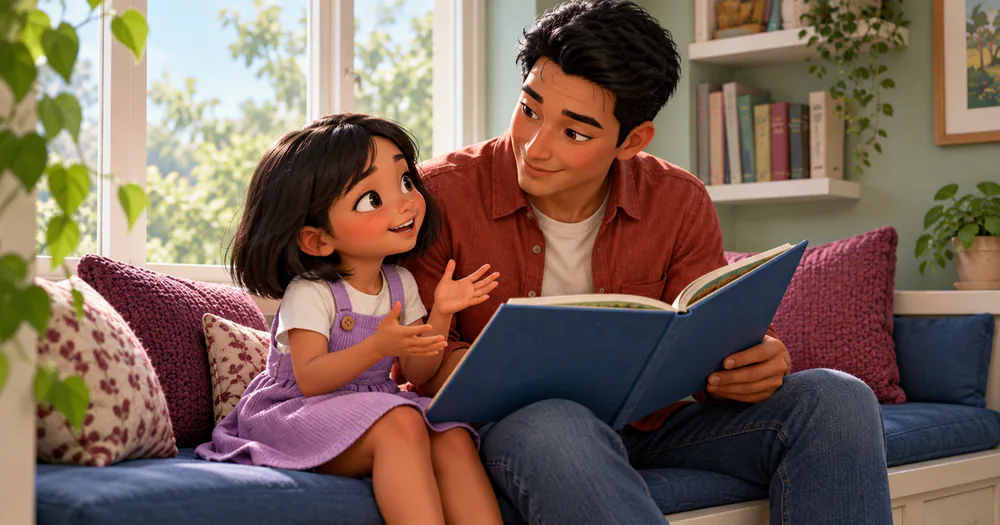
A story, our way: reading together beyond the words
Pictures to explore, voices to try and room for your child’s ideas: simple ways to enjoy books and stories together.
Read article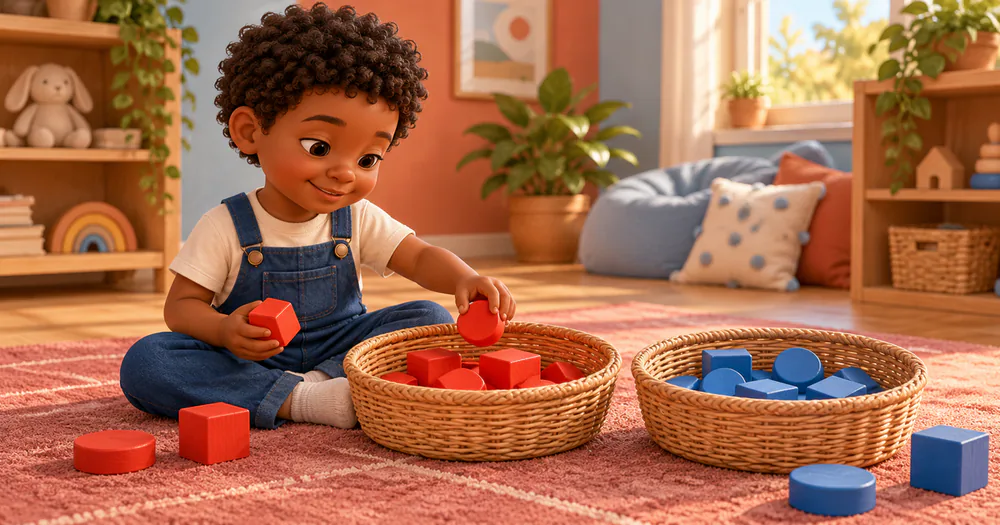
Matching and sorting: what children practise and how to try it at home
Pairs of socks, groups of shapes and objects that belong together: what children practise, what research tells us and simple ideas for home.
Read article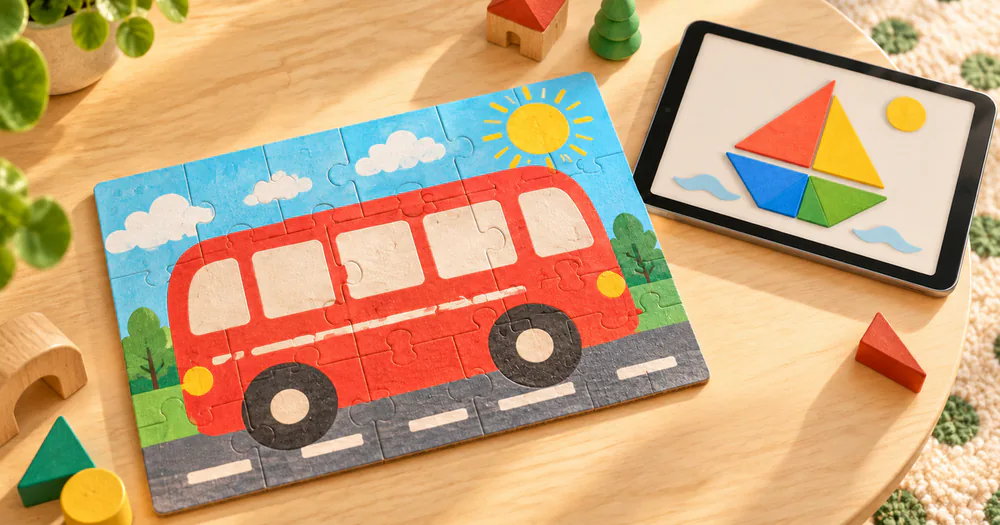
What do children learn from puzzles? Physical and digital play explained
What happens when a child compares, turns and fits puzzle pieces? Research explained simply, a physical–digital comparison and practical ideas for playing together.
Read article