
One walk, little discoveries: play and curiosity outdoors
Sounds, shadows and stories along the way: simple ideas for exploring together, even on a familiar walk.
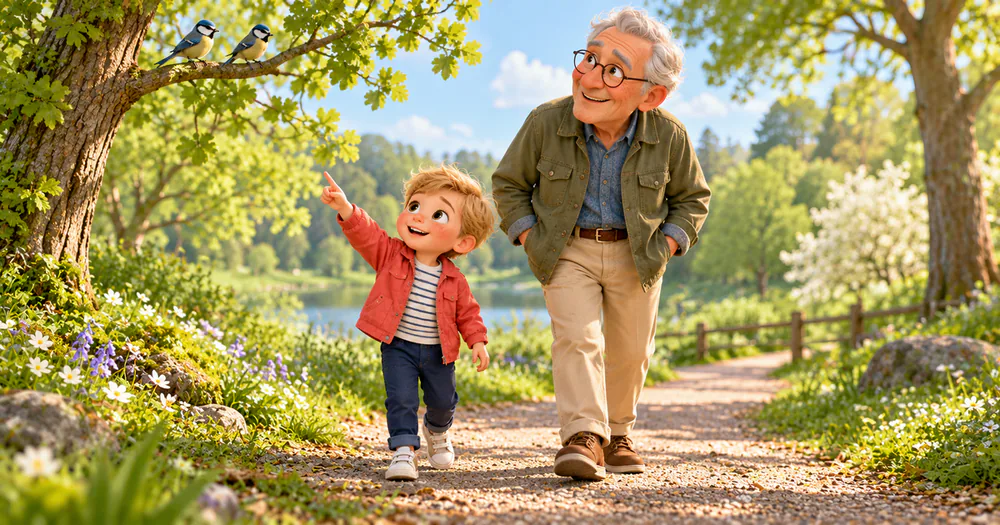
You step outside with somewhere to go. Your child stops beside a leaf, follows a shadow or asks where a sound is coming from. You stop for a moment to see what has caught their attention.
You can make room for that moment without planning a special outing. A familiar pavement, a courtyard or a park can be the starting point. Try one of the ideas below, follow your child’s interests and leave the rest for another day.
Begin with what your child notices
Before suggesting a game, see what already has their attention. Perhaps it is a pigeon walking along a wall or a delivery trolley rattling past. You might simply say: “You've spotted something. Shall we look?”
You can join in without turning every discovery into a question. “That leaf has a very long stem” leaves room for a reply, a gesture or a quiet look.
Choose a place where you can pause safely, away from traffic. Choose activities your child can comfortably join in with. You can watch from a bench or take a short route that is easy for them to use.
1. Pause and listen
Stop for a few moments and ask: “What can we hear from here?” Keep your eyes open and listen together. There is no target number of sounds to find.
For example: your child hears a rumbling sound. You say, “I hear it too. Shall we see where it's coming from?” It might be a bus, a trolley or something you cannot see.
Try copying a sound together: the soft rustle of leaves or the clack of footsteps. If listening is uncomfortable or does not interest your child, watch movement instead: a branch swaying, wheels turning, a bird hopping.
2. Play with a shadow
On a sunny patch of ground, notice the shadow beside you. Wave, lift one arm or make a shape with your hands. Invite your child to choose the next movement.
You could say: “My shadow has one arm up. What shall we make yours do?” You can take turns leading a tiny shadow dance without leaving your spot.
On an overcast day, skip this idea. There is no need to hunt for sunshine to complete the activity.
3. Find things that belong together
Choose a feature you can see: something round, something striped or two things with a similar colour. Point things out rather than collecting them.
For example: you notice a round drain cover. Your child points to a bicycle wheel. “They are both round. This one stays on the ground; that one turns.”
Let your child invent the next group. “Things that look like a dragon” is just as welcome as “things that are green”. If you are unsure what they mean, ask them to show you.
4. Revisit a familiar spot
Pick a tree, a flower bed or a small stretch of path you pass often. Next time, take another look together.
You might say: “There was a puddle here last time. What do you see today?” If neither of you remembers, start with what is in front of you. You could take a photo of the spot to compare on a later walk.
You might spend the whole time talking about a new leaf, fallen petals or how the light has changed. You do not have to know the name of every plant. “I don't know. We can look it up together” is an answer too.
5. Let something small start a story
A crooked branch becomes a wizard's walking stick. A tiny opening at the foot of a tree becomes an imaginary front door. Leave everything where it is and invent a story together.
You start: “Someone very small lives behind that door. Where do you think they went today?”
Your child: “To buy a giant strawberry!”
You: “How will they get it home?”
Follow their version, even if the story changes halfway through. If you spot an actual animal home, watch from a distance and leave its entrance clear.
When the walk takes a different turn
Your child may ignore your colour hunt and watch a digger instead. You can join them: “That scoop is carrying a lot of earth.” Or they may want to head home. The ideas are there to use when they suit you both.
If you need to keep moving, say so clearly: “We can watch until the digger puts this scoop down, then we need to go.” You can be curious together and still have somewhere to be.
Look closely without picking unknown plants, tasting berries or disturbing wildlife. You do not need to take anything home to enjoy these games.
Take a small memory home
Later, you could ask: “What would you like to tell someone about our walk?” Perhaps your child wants to draw the enormous wheel. Maybe they copy the trolley’s rattle or carry on with the strawberry story.
And if they would rather move on to something else, that is fine. The walk does not need a finished picture or a lesson at the end. You have already spent time noticing things together.
More to explore
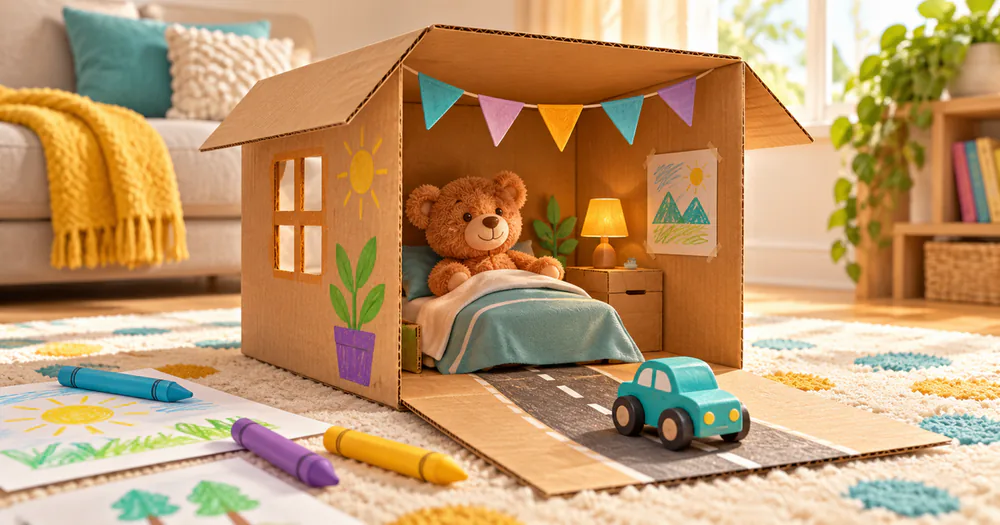
Play starts with a box: 7 ideas using things you already have at home
A cardboard box, a few sheets of paper and a favourite soft toy. Sometimes, that is all you need to begin a new game together.
Read article
A story, our way: reading together beyond the words
Pictures to explore, voices to try and room for your child’s ideas: simple ways to enjoy books and stories together.
Read article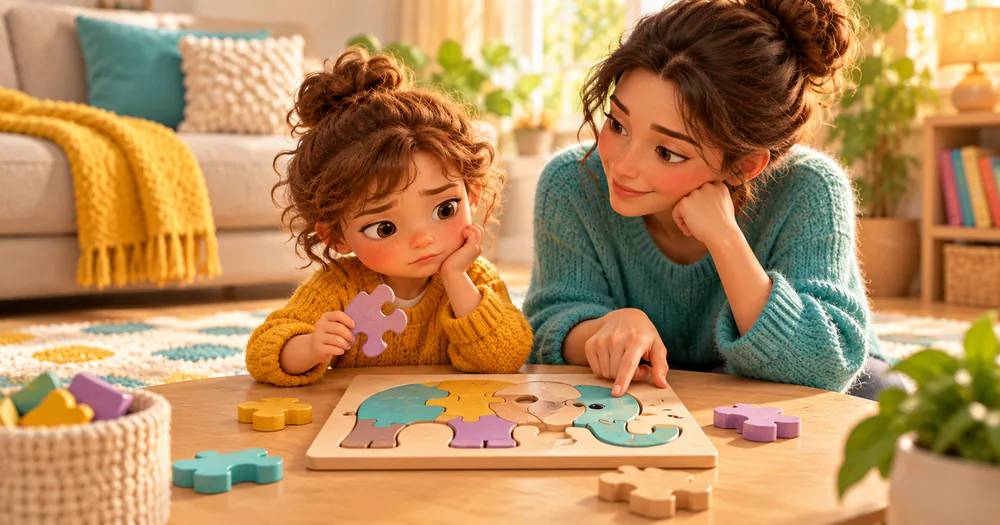
“I can’t do it!”: helping children when something feels hard
A puzzle, a zip, a drawing: everyday ways to offer encouragement, useful help and room for a break when your child feels stuck.
Read article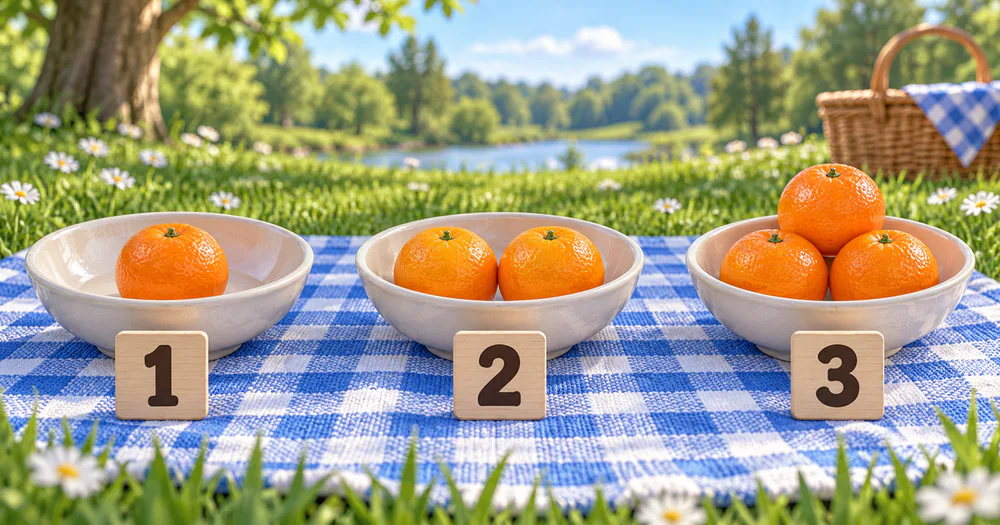
From counting words to quantities: making sense of numbers
Saying the number sequence is different from knowing how many. Explore small quantities through toys, place settings and everyday conversations.
Read article