
Letters, sounds and pictures: exploring the alphabet together
A letter has a shape, a name and sounds in words. Explore those connections with familiar pictures, simple examples and research explained clearly.
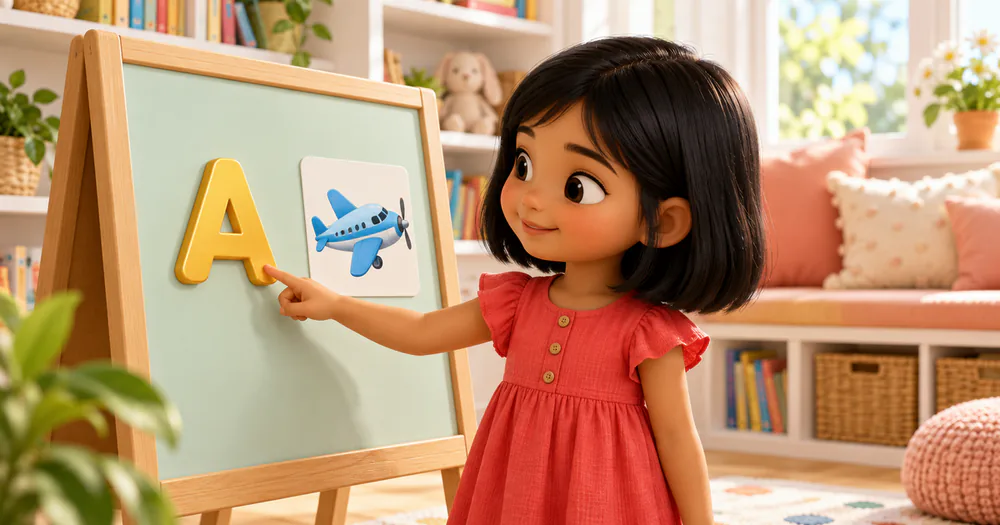
Your child spots the first letter of their name on a sign. “That's mine!” It is a small starting point: a written shape has become familiar and meaningful.
Learning letters involves more than remembering the alphabet song. A child can explore what a letter looks like, what it is called and which sound it represents in a word.
Pictures can help start that conversation, as long as we also pay attention to the spoken word.
A letter, its name and its sound
Take M. It has a written shape, a name pronounced “em” and a sound /m/ at the start of “moon”. The slashes here mean a sound we say, not the name of the letter. You do not need to show this notation to your child.
These are related pieces of knowledge, but they are not interchangeable. A child who names M has not necessarily noticed the first sound in “moon”. Singing the alphabet in order is another task again.
English also has different sounds for the same letter. A begins “apple” and “acorn”, but those words do not start with the same sound.
An aeroplane picture can be a familiar association with the written letter A; it is not an example of the short vowel sound in “apple”. For a first sound activity, choose a clear example and say the word aloud.
What does the research say?
The Institute of Education Sciences' preschool practice guide recommends connecting letters and sounds, with strong supporting evidence for that recommendation. It includes listening to sounds in spoken words as part of the work.
The guide concerns educational practice; it does not prescribe a deadline for each child to learn the alphabet at home. Preparing Young Children for School, recommendation 6.
In a study of 58 preschool children, some learned letter names and sounds, some learned sounds only, and some did a number activity instead.
Learning the name and sound together helped most with letters whose name holds a clue to the sound, like “bee” for B. The study was in English, so it is not a rule for every language. The study on letter names and sounds.
How pictures can help you begin
A picture gives you something to name together. Before choosing a letter, agree on the word: one child may call an animal a “rabbit”, while another says “bunny”. Both labels can be reasonable, but their first sounds differ.
Try a few clear associations such as M with moon, S with sun and F with fish. These are examples for English.
If you are playing in another language, use that language's word and sound rather than translating the picture label and keeping the original letter.
Four steps to try together
1. Begin with something familiar
Write your child's name clearly on a card. Point to its first letter and name it. Find another example of that letter in a book or on a familiar label.
You can show the capital and lower-case forms together when useful: M and m belong to the same letter.
If the name has an unusual spelling or pronunciation, use another familiar word for a simple sound example. The child's name can still be meaningful without becoming the first phonics lesson.
2. Say the word before choosing the letter
Place a picture of the sun beside a picture of a fish. Say both words naturally. Then listen for /s/ at the beginning of “sun”. You could stretch that first sound briefly: “sss-un”. Keep it playful and avoid adding an extra “uh” to the sound.
If your child is unsure, model it rather than repeating the question more loudly: “I hear /s/ in sun. Here is S.”
3. Match one letter with more than one example
Use S with sun, sock and soap. Offer one new picture at a time and say its name. Later, you can add a picture that starts differently and explore it together: “Fish starts with /f/. Shall we put it beside F?”
Recognising a picture and listening for a sound are separate demands. Reduce the number of choices if the pictures themselves are unfamiliar.
4. Find letters in everyday places
On a cereal box, in a book title or on a name card, point out a letter you have explored. It might be a different colour or typeface. Let your child look, point or ask you to name it.
You can also trace a large letter with a finger or make its shape with modelling dough. This explores the shape; it does not replace talking about its sound. Use materials suitable for your child and avoid small detachable letter magnets.
What if letters get mixed up?
Show the right example without keeping score. “That is P. We were looking for B. Let’s compare them.” If comparing makes it harder, put one letter aside and try a pair that looks more different.
Keep the conversation short enough for your child to stay involved. Reading a story together, chatting and noticing print can continue even when a letter activity is not appealing. You do not need a new letter every day or a completed alphabet before enjoying books.
Choosing a digital letter activity
Check that the spoken sound matches the language and word shown. An app that asks a child to tap A practises something different from one that asks them to listen for a sound.
A picture of a ball might be called “ball”, “football” or something else, so listen to the app's label before starting.
If your child is learning phonics at school, ask which sounds and pronunciations they are working with so you can use consistent examples. The aim is to connect written marks with familiar spoken language, one understandable example at a time.
More to explore
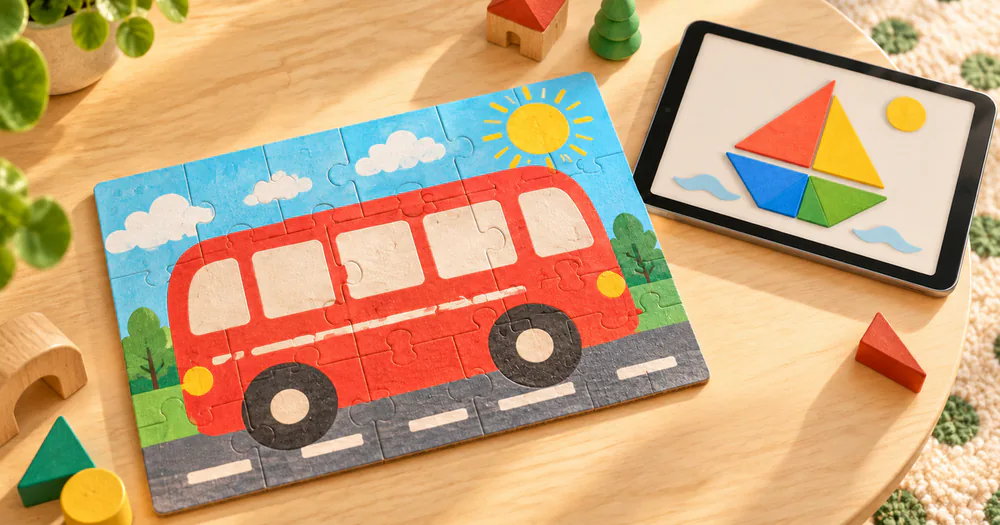
What do children learn from puzzles? Physical and digital play explained
What happens when a child compares, turns and fits puzzle pieces? Research explained simply, a physical–digital comparison and practical ideas for playing together.
Read article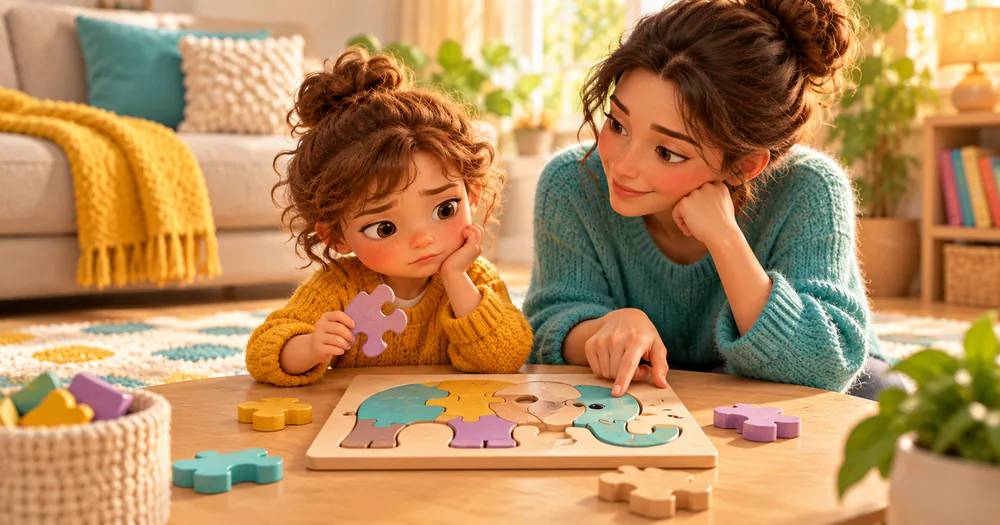
“I can’t do it!”: helping children when something feels hard
A puzzle, a zip, a drawing: everyday ways to offer encouragement, useful help and room for a break when your child feels stuck.
Read article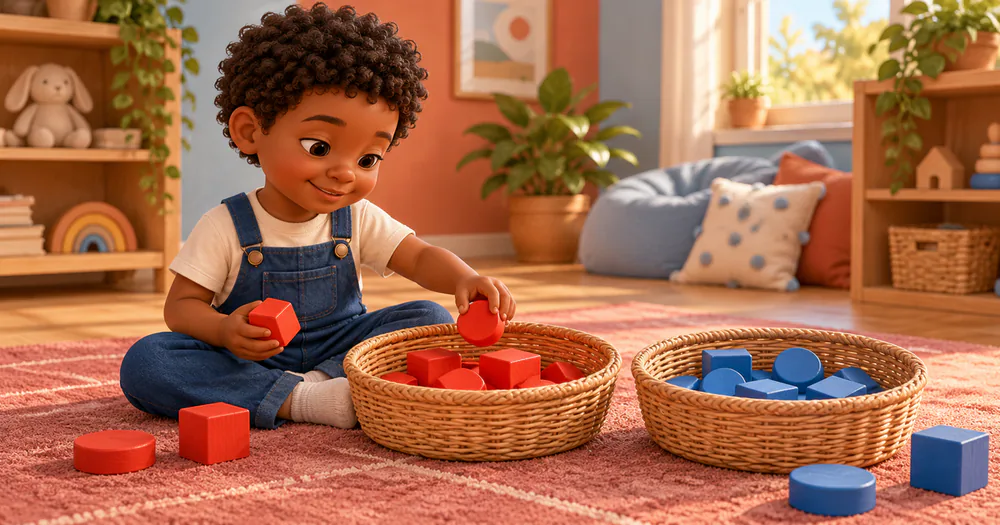
Matching and sorting: what children practise and how to try it at home
Pairs of socks, groups of shapes and objects that belong together: what children practise, what research tells us and simple ideas for home.
Read article
One walk, little discoveries: play and curiosity outdoors
Sounds, shadows and stories along the way: simple ideas for exploring together, even on a familiar walk.
Read article